
Start with the roof you have, not the brochure
Material decisions get made backwards all the time. Someone sees a metal roof they like, gets a bid, and only later learns the pitch, the framing or the neighborhood's rules point another direction. In our view the honest order is: pitch and structure first, exposure second, budget and looks third.
Pitch decides what is even allowed. Shingles and most tile need a minimum slope to shed water; flatter sections need a membrane or a metal system rated for low slope. Many Treasure Valley homes mix both, with a steep main roof and a shallow porch or addition, and those transitions are where leaks like to live.
Structure decides weight. Asphalt and metal are light. Concrete and clay tile are heavy, and moving from shingles to tile is a framing question for a contractor or engineer, not a style choice.
Exposure is the local part. Strong summer sun favors materials and finishes that handle UV. Snow favors good eave details and an attic that stays cold. Wind favors rated products and careful fastening. Near the foothills, ember resistance moves up the list. Our Treasure Valley roof weather guide explains each stress.
Material explorer
Pick a material to see how it typically behaves under each Treasure Valley stress. These are general traits; specific products vary, so read the manufacturer's installation instructions and rating documents for anything you are quoted.
Asphalt shingles
The default on most Treasure Valley houses. Architectural (laminated) shingles have largely replaced flat three-tab styles for their thicker profile and higher wind ratings.
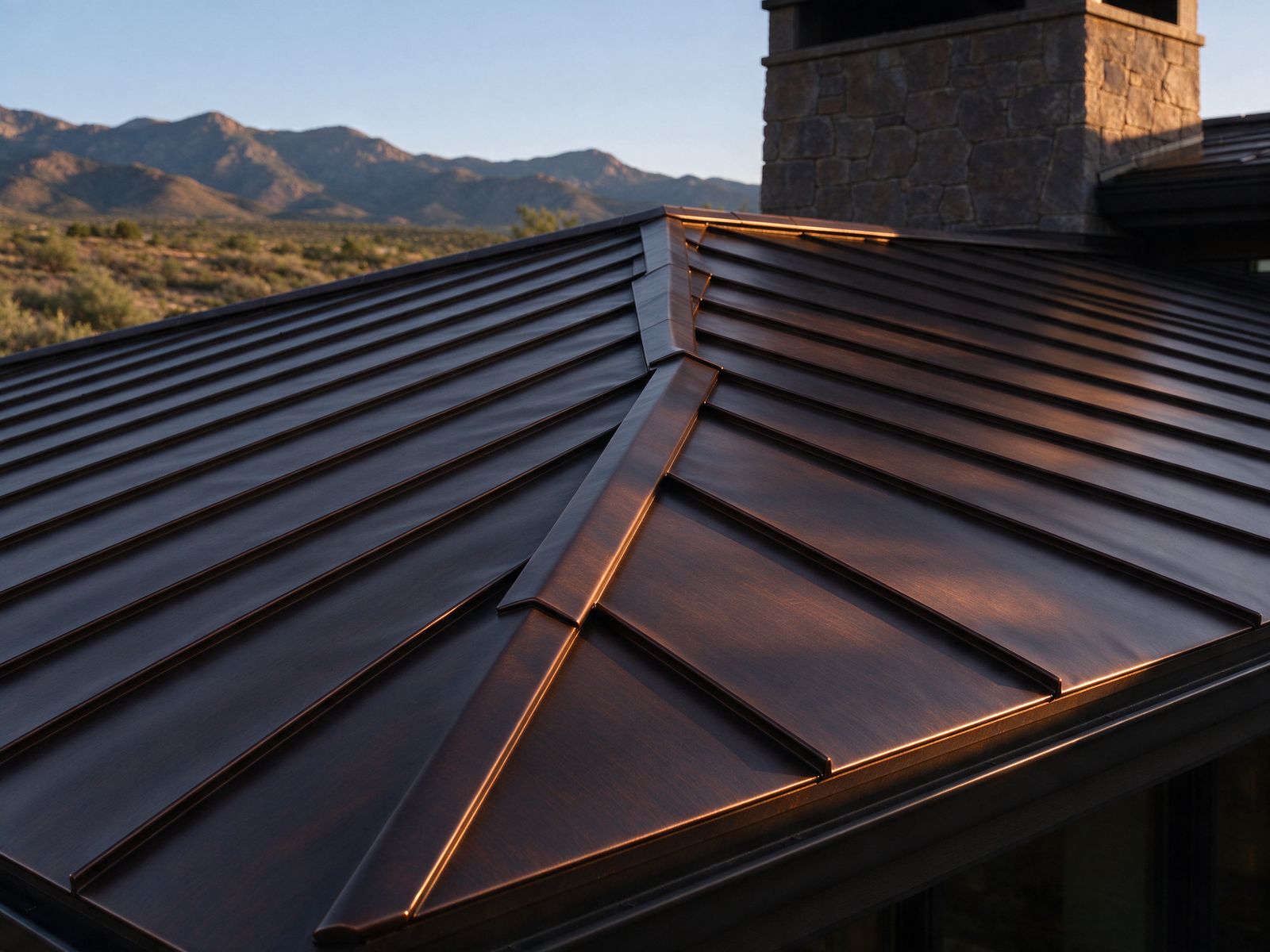
Metal
Standing seam panels with concealed fasteners, or exposed-fastener panels on simpler buildings. Steel and aluminum in factory-applied finishes are the common choices.
Concrete and clay tile
Common on certain architectural styles. Long-lived surface; the underlayment beneath carries the waterproofing and usually needs attention well before the tiles do.
Low-slope membranes
Flat and nearly flat sections over porches, additions and modern designs: single-ply membranes such as TPO or EPDM, or modified bitumen.
Side by side, without the sales pitch
No prices here on purpose: material and labor costs move, and every roof is different. Compare scopes and written bids instead.
| Trait | Asphalt | Metal | Tile | Low-slope |
|---|---|---|---|---|
| Typical slope | Steep | Steep or low, by system | Steep | Flat to low |
| Weight | Light | Light | Heavy | Light |
| Main weak point | UV aging, edges in wind | Fasteners, snow slide | Underlayment, breakage | Seams, drains |
| Walkable for repairs | Yes, with care | With care | Easily cracked | Yes |
| Fire rating route | Class A assemblies common | Class A assemblies common | Class A common; close open ends | Varies by system |
Metal roofs drop snow in sheets. Over an entry, a walkway or a lower roof, that is a safety and damage issue. Snow guards are part of a metal scope in snow country, not an extra.
What sits under the roof matters as much as what you see
Every roof is a system. The visible layer gets the attention, but the parts underneath decide whether water that gets past it finds a second line of defense.
- Decking. The plywood or OSB sheathing. Soft, delaminated or rotted sections should be replaced during a tear-off; ask how replacement is priced in the bid.
- Underlayment. Synthetic underlayments have largely replaced felt on many jobs. It is the layer that protects the deck from wind-driven rain and from water that gets past the surface.
- Ice barrier. A self-adhering membrane at eaves, and often in valleys and around penetrations.
- Flashing. Metal at walls, chimneys, skylights and valleys. Reusing old, bent or rusted flashing under a new roof is a classic false economy.
- Ventilation. Intake at the eaves and exhaust high on the roof. See Boise attic ventilation for why the balance matters.
