
Summer heat and UV wear roofs from the top down
Boise summers are hot and dry, with long stretches of clear sky. For an asphalt shingle roof that means a steady dose of ultraviolet light and high surface temperatures. The asphalt slowly loses the oils that keep it flexible, the ceramic granules that shield it start to loosen, and the shingle turns brittle. The common failure point is not one dramatic day; it is the accumulation of summers.
You can usually see heat aging before it causes a leak. Look for granules collecting in gutters or at downspout outlets, dark bald patches where the asphalt shows through, and tabs that cup or curl at the edges. South- and west-facing slopes age first, so a roof can look fine from the front yard and tired from the back.
A hot, poorly ventilated attic cooks shingles from underneath while the sun works from above. If one roof is aging faster than its neighbors, ask about attic ventilation in Boise homes before you blame the shingle brand.
Heat also matters for other materials. Metal panels expand and contract daily, which works on fasteners and seams over time. Concrete and clay tile handle sun well, but the underlayment beneath them is the part that ages, and on low-slope roofs the membrane's seams and surface coating take the most UV.
Snow load is a framing question, not a shingle question
Treasure Valley winters vary from year to year, and most bring at least some snow. A roof is designed for a ground snow load set by the building code and the local jurisdiction, and that design value differs with location and elevation. Homes built to code in the valley floor are designed for the snow typical there; older homes, additions and DIY structures like patio covers are where surprises happen.
Signs that load deserves a professional look include doors that start sticking upstairs during a heavy snow, new cracks in drywall near the ceiling, a visible sag in a ridgeline or a creaking roof. Those are reasons to call a contractor or structural engineer, not to climb up with a shovel.
Snowy roofs are slick and edges are hard to see. If snow needs to come off, a long-handled roof rake used from the ground is the homeowner-safe option. Leave anything more to insured professionals.
Ice dams start inside the house
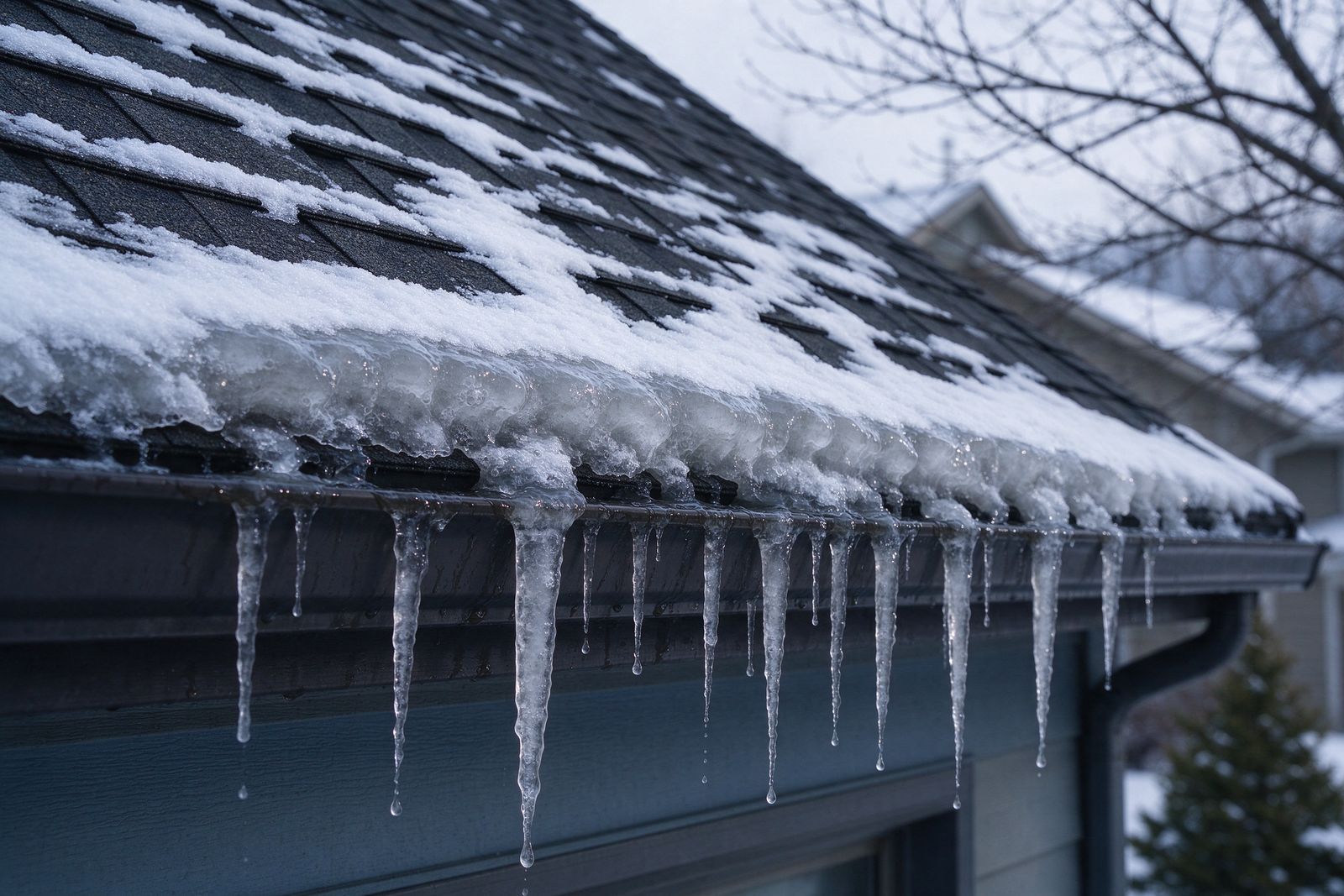
An ice dam forms when warm air from the living space heats the upper roof deck, snow melts, and the water runs down to the overhang, which sits outside the heated envelope and stays cold. There it refreezes into a ridge. More meltwater backs up behind the ridge and can work under shingles, because shingles shed running water but are not designed to hold standing water.
Three things work together to prevent them:
- Air sealing at the attic floor: around light fixtures, the attic hatch, plumbing and wiring penetrations.
- Insulation deep enough to keep heat in the house.
- Ventilation that keeps the roof deck close to outdoor temperature.
Building codes in areas with a history of ice dams generally call for an ice barrier membrane along the eaves, extending up the roof past the interior wall line. Ask any bidder whether the scope includes it and how far up the roof it runs. It does not stop an ice dam from forming; it limits what the backed-up water can reach.
| What you see | Likely cause | Who to ask |
|---|---|---|
| Thick icicles along one stretch of eave | Heat loss above that area, often a bath fan or recessed lights | Insulation or roofing contractor |
| Ceiling stain near an exterior wall in late winter | Water backed up behind ice at the eave | Roofing contractor |
| Frost on attic nails on cold mornings | Moist indoor air leaking into the attic | Insulation contractor or energy auditor |
Wind finds the edges first
Spring fronts and summer thunderstorm outflows bring gusty wind across the valley, and open ground around newer neighborhoods leaves some roofs fully exposed. Wind damage on asphalt shingles usually starts at the perimeter: the rake edges, the ridge caps and the first course at the eave. A tab that lifts and folds back gets a crease across it, and a creased shingle often stops sealing and becomes the next one to go.
Shingles carry wind ratings from standardized lab tests (you will see references to ASTM D3161 or ASTM D7158 on product literature). The rating assumes the shingle is installed to the manufacturer's instructions, including the number and placement of nails. A good bid names the product and the nailing pattern.
After a wind event, start from the ground. Count missing pieces, look for shingle fragments in the yard and check the ridge. Photograph everything with the date before anything gets fixed. Our guide to Boise roof storm damage and insurance claims covers the paperwork side.
Wildfire embers and ember-resistant vents
Many homes on the valley's edges, especially along the Boise foothills, sit where neighborhoods meet open grass and sagebrush. In a wildland fire, wind-blown embers can travel well ahead of the flames. They tend to ignite homes through small openings and dry debris rather than through a direct wall of fire.
The roof questions to ask are practical:
- Roof covering rating. Class A is the highest fire-resistance rating for roof coverings under standard tests. Many asphalt shingles, metal and tile assemblies can achieve it; ask what rating the full assembly carries.
- Vents. Attic, soffit and gable vents can let embers in. Ember-resistant vents are tested for this (ASTM E2886 is the common standard), and fine noncombustible metal mesh over standard vents is a widely recommended upgrade. Mesh that is too fine can clog and cut airflow, so the attic still needs to breathe.
- Debris. Needles and leaves in gutters, valleys and against dormers are tinder. Cleaning them before late summer is the cheapest protection there is.
- Gaps. Open ends of tile or barrel profiles, gaps at roof-to-wall joints and missing bird stops are entry points worth closing.
Some cities and counties adopt wildland-urban interface rules for certain areas. Check with your city about any requirements for your address before you choose materials.
A Treasure Valley roof calendar
Pick a month to see what usually tests a roof then and what to check. It starts on the current month.
January: ice and load
Cold snaps follow snow. Watch for icicles thicker than a finger at the eaves and frost on attic nails. Both point to warm air reaching the roof deck.
Heat and wind show on the outside; snow and ice usually trace back to the attic. Look at both before deciding what to fix, then compare Boise roofing materials if replacement is on the table.
Common questions
Do ice dams happen in Boise?
Yes. They form when heat from the house melts snow on the upper roof and the water refreezes at the colder eaves. They are most likely after a run of snowy days followed by cold nights, and they point to attic heat loss and ventilation more than to the shingles themselves.
Should I rake snow off my roof?
Usually only when a contractor or engineer tells you the load is a concern, or to relieve an ice dam from the ground with a roof rake. Climbing onto a snowy roof is how people get hurt. Never chip at ice with tools that can cut shingles.
What is an ember-resistant vent?
A vent designed to resist embers and flames getting into the attic, often tested to a standard called ASTM E2886, or a standard vent fitted with fine noncombustible metal mesh. Ask your contractor what the vent is rated for and check with your city on any local wildfire rules.
