
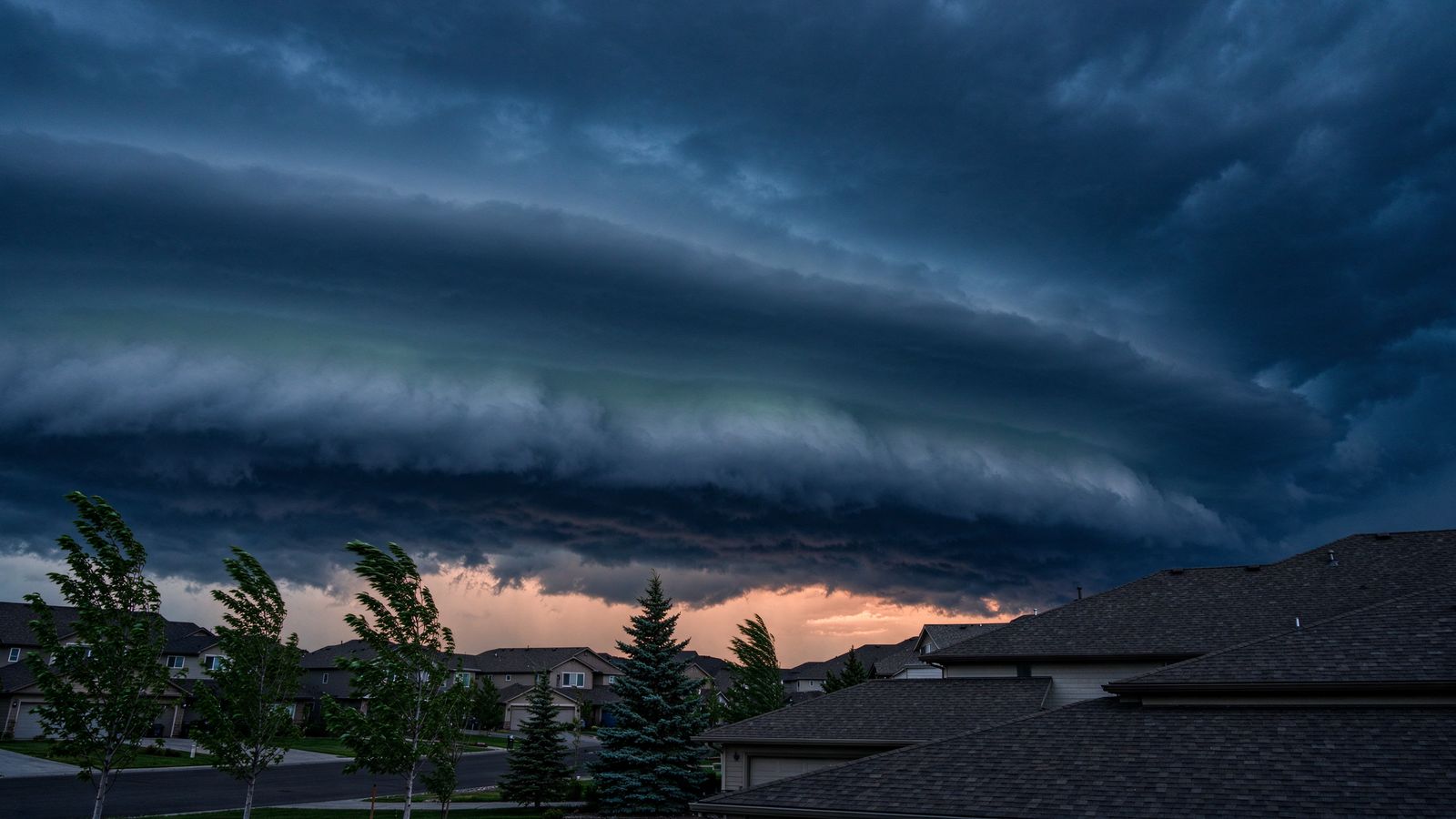
Recognizing storm damage from the ground
Most storm damage can be spotted, or at least suspected, without climbing anything.
- Wind: missing shingles, shingle pieces in the yard, lifted or folded tabs, missing ridge caps, bent flashing or torn-off vent caps.
- Hail: dents in gutters, downspouts, metal vents and window wraps; dings on outdoor equipment; granules washed into gutters right after the storm; dark spots on shingles where granules were knocked off.
- Debris: branches on the roof, punctures, or gutters pulled away from the fascia.
- Inside: new ceiling stains, drips at light fixtures, or damp insulation in the attic.
Not all wear is storm damage. Curling and granule loss spread evenly across sun-facing slopes are usually age. Insurers distinguish sudden damage from long-term wear, so be honest about what you saw and when. Our Treasure Valley roof weather guide shows what normal aging looks like.
A photo checklist that holds up
| Shot | Why it helps |
|---|---|
| Each side of the house, wide | Shows the whole roof and context |
| Close-ups of damage with something for scale | Makes size and type clear |
| Gutters, downspouts and metal vents | Dents are easy evidence of hail |
| Debris in the yard | Links missing pieces to the event |
| Interior stains and the attic | Shows water entry and extent |
| Older photos of the roof, if you have them | A before picture is the strongest comparison |
Keep the originals with their dates. Do not edit them. A shared folder with the storm date in its name keeps everything together for the adjuster, the contractor and you.
Policy terms worth understanding before you need them
Every policy is different, and the definitions on your own documents are the ones that count. These terms come up in most roof claims:
- Deductible. Some policies have a separate deductible for wind or hail, sometimes set as a percentage of the dwelling coverage rather than a flat amount.
- Replacement cost vs actual cash value. Replacement cost coverage generally pays to repair or replace without subtracting depreciation, often in stages. Actual cash value subtracts depreciation, which can make a big difference on an older roof.
- Roof age and payment schedules. Some policies pay roofs on a schedule tied to age. Look for roof-specific endorsements.
- Code upgrades. Coverage for work the building code requires during a repair, such as ice barrier, may need specific ordinance or law coverage.
- Matching. How a policy handles mismatched materials varies. Ask your agent rather than assuming.
We are not an insurance agency or adjuster. For questions about your coverage, talk to your agent or insurer. For disputes, a licensed attorney or public adjuster can explain your options.
Traps to avoid after a storm
Storm-chasing crews follow bad weather from region to region. Some do good work, but a local track record, a permanent business address and verifiable Idaho registration are reasonable things to expect. See how to choose a roofer in Boise for the checks.
Where to get help
Your agent or insurer is the first stop for policy questions. The Idaho Department of Insurance publishes consumer information and handles consumer questions about insurers. For the roof itself, a written inspection report from a registered contractor gives you something concrete to discuss with the adjuster.
If you are unsure whether the roof needs a repair or a full replacement after the storm, the Boise roof repair or replacement guide walks through the decision.
Protect the house, photograph everything with dates, read the policy before you sign anything, and verify anyone who offers to fix it. That order protects you whatever the claim decision turns out to be.
Common questions
Will my insurance pay for a new roof?
Only your policy and your insurer can answer that. Many homeowner policies cover sudden damage from events like wind or hail and exclude wear and tear, and some pay differently depending on roof age. Read the declarations page and roof-related endorsements, and ask your agent.
Should I let a contractor handle my claim?
A contractor can document damage and explain repairs, but the policy is a contract between you and your insurer. Be cautious about signing anything that assigns your claim benefits to someone else, and read every document before you sign.
How soon should I report damage?
Policies usually require prompt notice and reasonable steps to prevent further damage, such as a temporary tarp. Check your policy for deadlines and keep receipts for any emergency protection you pay for.
